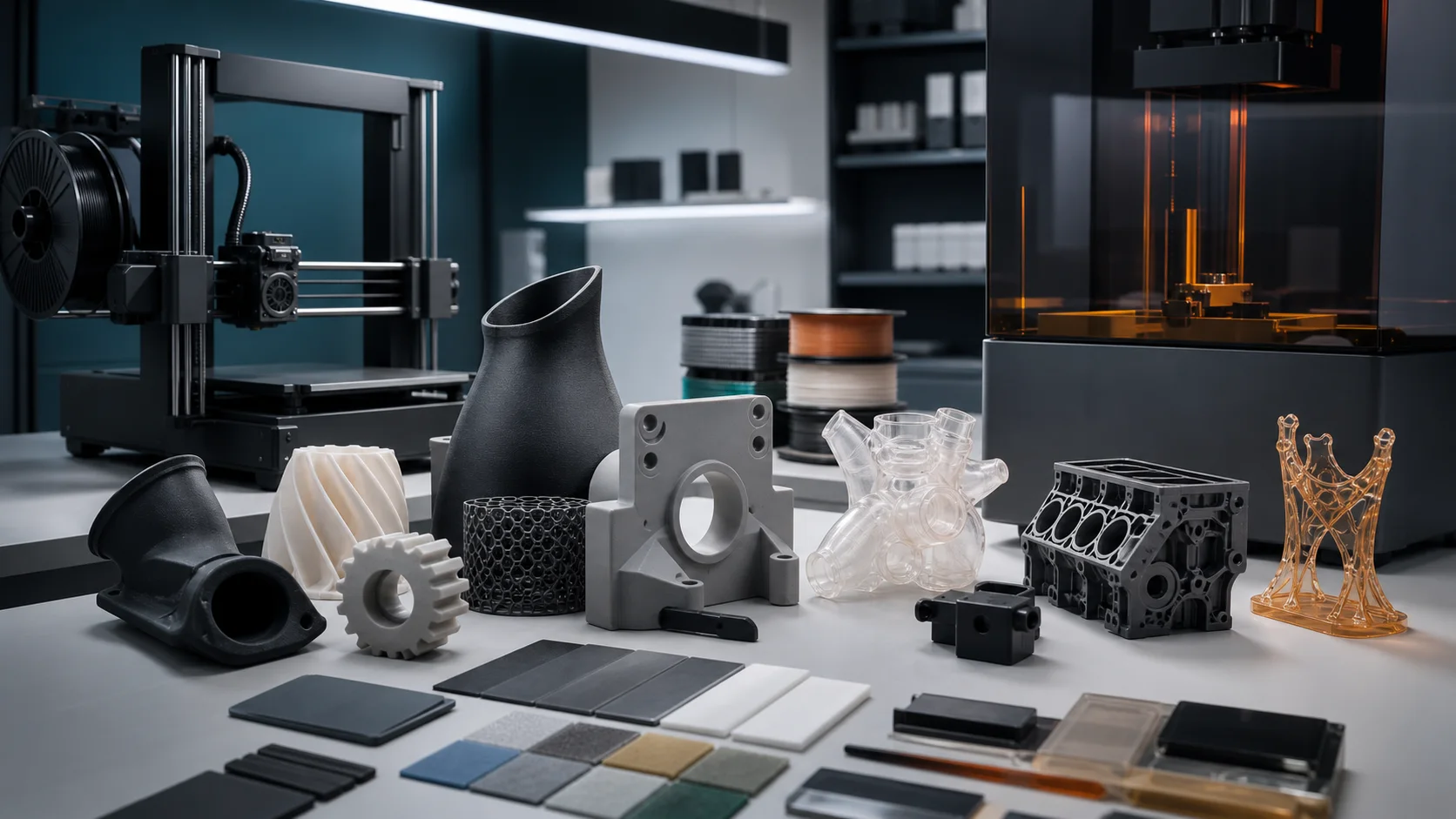
FDM vs SLA: 3D Printing Technologies Compared
Comparison of the two most common 3D printing technologies
Calculate FDM printing priceHow Does FDM 3D Printing Work?
FDM (Fused Deposition Modeling) builds a part by depositing melted thermoplastic layer by layer. The layers bond into a solid product based on the supplied 3D model.
FDM printing works on the principle of layering molten plastic. The printer gradually builds the object layer by layer from materials such as PLA, ABS, or PETG. This method is cost-effective and ideal for larger parts where mechanical resistance is important.
Material, model orientation, layer height, and infill all affect the result. We choose these parameters to match the part's intended use while keeping production cost reasonable.
What is the difference between FDM and SLA printing?
FDM and SLA both build parts layer by layer, but differ in material, accuracy, surface finish, price and suitable applications.
| Criterion | FDM | SLA |
|---|---|---|
| Accuracy | Typically 0.1–0.3 mm; suitable for functional parts | Finer detail, typically 0.025–0.1 mm |
| Materials | PLA, PETG, ABS, ASA and TPU thermoplastics and engineering composites | Liquid photopolymer resins |
| Surface finish | Visible layer lines with a durable, functional result | Smoother surfaces and fine details |
| Price | Cost-effective for larger parts, prototypes and short runs | Higher material and post-curing costs |
| Typical use | Functional prototypes, spare parts, brackets and enclosures | Miniatures, jewellery models and highly detailed visual prototypes |
We specialise in FDM printing with thermoplastics. SLA is included here to help you compare technologies, not as a service we offer.
Suitable for:
Functional prototypes requiring mechanical resistance, spare parts for household appliances or machinery, workshop tools and fixtures, architectural models, housings and boxes for electronics, larger objects (up to 30×30×30 cm), educational projects and school models.
Materials:
- PLA (eco-friendly, basic models)
- ABS (durability, mechanical parts)
- PETG (impact resistance)
- TPU (flexible materials)
- ASA (UV resistance, outdoor use)
- Nylon (high strength and durability)
- PAHT-CF (carbon fiber composite, extreme strength)
Advantages:
- Lower price
- Durable prints
- Wide range of materials
- Suitable for larger objects
Disadvantages:
- Visible layers
- Lower detail precision
- Limitations for complex geometries
When to choose FDM printing
Functional prototypes
Quickly verify dimensions, assembly and mechanical function before serial production.
Replacement parts
Covers, brackets, gears and other components that are no longer readily available.
Production tooling
Templates, assembly aids and holders tailored to a specific operation.
Short production runs
Produce dozens of parts without injection mould tooling and keep the design flexible.
Frequently asked questions about FDM and SLA printing
What is the difference between FDM and SLA 3D printing?
FDM builds a part from melted thermoplastic (PLA, PETG, ABS, ASA or TPU), while SLA cures liquid photopolymer resin with UV light. FDM is usually the better fit for durable functional parts and larger volumes; SLA offers a smoother surface and finer detail. The actual strength and price depend on the chosen material, the geometry of the part and the quantity.
Which is more accurate, FDM or SLA?
SLA is more accurate — typically 0.025–0.1 mm, compared with 0.1–0.3 mm for FDM. For functional parts, however, strength, heat resistance and material choice usually matter more than a few hundredths of a millimetre, so the finer detail of SLA often brings no real benefit.
When should I choose FDM and when SLA?
Choose FDM for functional prototypes, spare parts, brackets, enclosures, larger objects and short production runs — it is cheaper and more durable. SLA suits miniatures, jewellery models and visual prototypes where fine detail and a smooth surface matter more than mechanical load.
Do you also offer SLA printing?
No, we specialise in FDM printing from thermoplastics and we do not offer SLA as a service. We describe it here so you can compare the technologies objectively. If FDM suits your part, you can calculate the printing price online.
Do you have a model for FDM printing?
Upload it, choose a material and see the manufacturing price in moments.
Calculate FDM printing price